During the early Middle Ages, fortified settlements were established on lake islands —alongside, and perhaps even prior to, those built on higher ground — taking advantage of locations that were naturally secure and isolated. In most cases, however, subsequent events led to the demolition of the castle architecture, and today our islands are known for a completely different kind of building. Speaking of castles, we offer a brief overview of these disappeared structures.
THE CASTLE ON THE ISLAND OF SAN GIULIO
The first and best documented example of an island castle is the so-called castrum de Insula Sanctii Julii, located until 1840 in the centre of the island of San Giulio on Lake Orta.
We know that the island was fortified as early as the Byzantine era, as the bishop of Novara, Filacrio, took refuge there during a moment of danger during the Greek-Gothic wars (553).
In the Lombard era, the island appears to have been the seat of a duke, while the first written mention of an actual castle dates back to 911, when a diploma issued by King Berengar I mentions that it belonged to the Bishop of Novara, Leone.
In the mid-10th century, the fortification was referred to in a diploma by Emperor Otto I and in the life of Abbot Guglielmo da Volpiano. During this period, the castrum was the scene of major events: Berengar II seized it from the bishops of Novara and made it his headquarters and centre of rebellion against the Saxon emperor. The castle was entrusted to Berengar's energetic wife, Queen Willa. In 962, Otto I conquered it and entrusted it once again to the bishops of Novara. It was during the siege that the future abbot Guglielmo da Volpiano was born on the island, the son of the noble commander Roberto da Volpiano and his wife Perinzia, loyal followers of Berengar. As a sign of goodwill towards the enemy, Otto I baptised him.
After the events of the late 10th century, the castle was often mentioned as a place of refuge for the bishops of Novara. In 1006, Pietro III was there, and again in 1056, Oddone.
In the 12th century, its military function became less important, and it was always mentioned in close relation to the parish church and the canons residing there. The island, previously considered a castrum in its entirety, was now divided into areas of residence for the canons and a 'domignono', i.e. a fortified palace for the bishop, which stood at its summit.
The structure of the castle is documented in historical iconography and in the maps of the Catasto Teresiano (1722).
The castle was demolished in 1840 at the behest of Bishop Morozzo, who wanted to build a seminary in its place, now a monastery for Benedictine nuns.
THE CASTLES OF THE BORROMEAN ISLANDS
We have documentary evidence of the presence of a castle on ISOLA MADRE, known in medieval times as Isola di S. Vittore, because, in addition to the castrum, there was a baptismal church dedicated to this saint.
The castle, probably dating back to late antiquity, was mentioned for the first time in 998, in the will of Bishop Liutefredo of Tortona. The island, on the other hand, had already been a feudal possession of the vassal Eremberto, Count of Massino, since the 9th century. In 1014, it was granted by Emperor Henry II to the monastery of San Felice in Pavia.
In 1501, the island was acquired in perpetual entifeusi (fief-holding) by Lancillotto Borromeo, with authorisation granted by the Bishop of Novara. For a time, the church and the baptistry continued to be maintained and used for services, but from 1503 the bishop, with papal approval, granted the Borromeos permission to convert them to secular use. They were therefore demolished. There is no mention of the fortification, which can be assumed to have been similarly demolished and/or incorporated into the Borromeo palace.
More detailed and extensive evidence exists regarding the castrum of ISOLINO DI SAN GIOVANNI. The castle was expressly mentioned for the first time in 999 in a diploma issued by Otto III, referred to as Castellum Sancti Angeli. The name is the same as that by which the island was formerly known, called Sant'Angelo because of the presence on it of a church dedicated to St Michael the Archangel, with a baptistery dedicated to San Giovanni. The latter dedication is the one that has remained in the modern name.
In 1152, a privilege granted by Frederick Barbarossa confirmed the ownership of the castle on the island of Sant'Angelo to the counts Da Castello Manfredo, Cavalcasella, Ardizzone and Crollamonte, who held the rights to collect taxes throughout the court of Pallanza. The role of the Da Castello feudal lords ceased in 1223, when the village of Pallanza was conquered by the Municipality of Novara.
From that moment on, the island became the property of the church of S. Leonardo, whose canons continued to celebrate services in the church there.
In 1632, the canons of Pallanza signed a perpetual leasehold agreement for the Isolino with Giulio Cesare Borromeo, and the island, like the islands Madre and Bella, came under the control of the powerful family. In the 18th and 19th centuries, the Borromeo family carried out architectural work and modernised the structures, which they rented out to various personalities as holiday homes. In the early 20th century, the Borromeo family prevented the canons of Pallanza from celebrating mass in the church and in 1926 obtained permission from the diocese to transform it into a private venue.
In the 19th century, Agostino Viani, in his historical work dedicated to Pallanza, still noted the presence of parts of the castle and its towers, which occupied most of the surface area of the Isolino. Even today, the imposing substructures incorporated into the Borromeo villa bear witness to how it was built using the castle walls, while a hall with an apse, which has become a private room in the villa, was the ancient church of Sant'Angelo.
OTHER PLACES
Visconti Castle - Massino Visconti
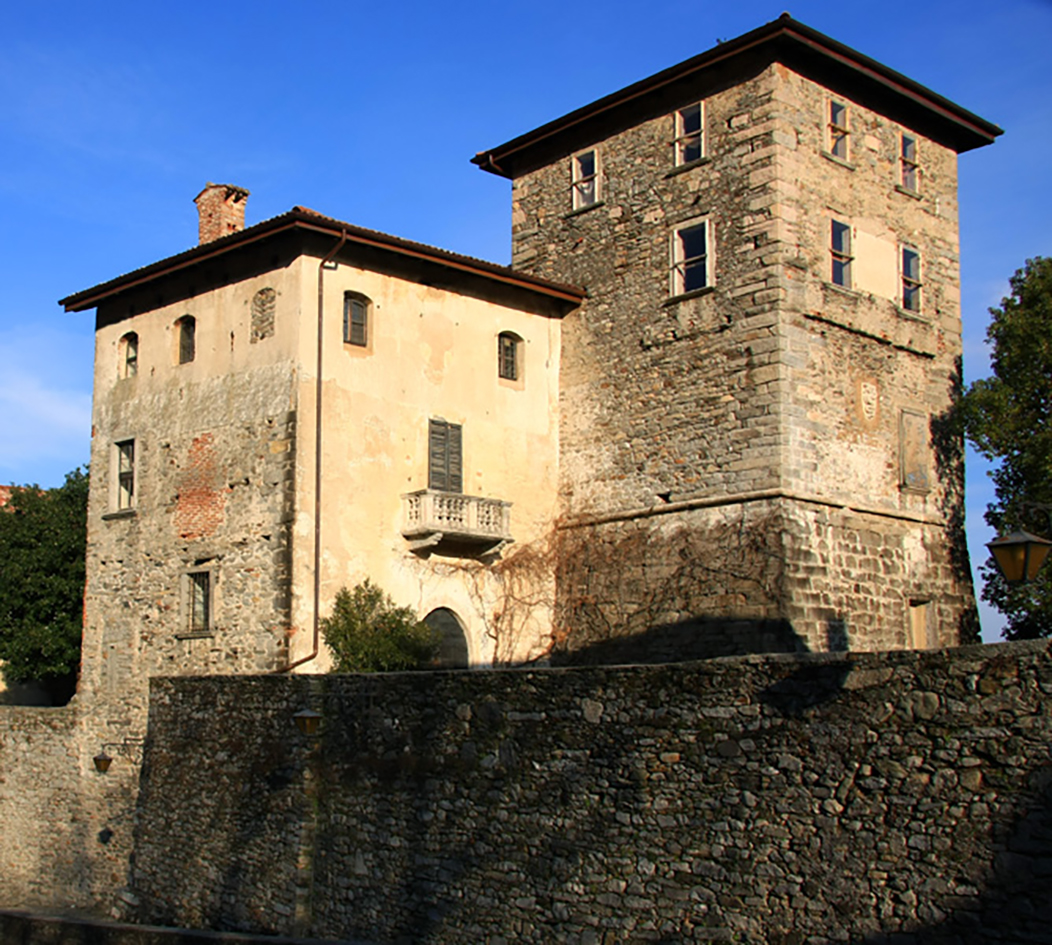
Of the original fortification, built on the site of an old convent by the Visconti family, feudal lords from 1139, and subsequently remodelled and enlarged, only one tower, the central keep, of the four original ones, is preserved today. Visible from the outside, it is privately owned.Castellaccio di Brovello - Brovello Carpugnino
On Brovello's high ground called 'Scarlasc' (Castellaccio) there are the modest ruins of a complex fortified structure, which is the subject of archaeological investigations. The typology is that of the castle with enclosure, probably of medieval origin as a place of refuge for people and goods in times of danger. The area is communal property, within walking distance, there are ruined wall remains and a turret converted into a warehouse.Moriggia Castle - Frino di Ghiffa
The original castle, dating back to the 15th century, was the seat of feudal power of the Moriggia family, who received the territory as a fiefdom from the Visconti in 1447. Situated in a panoramic position in the hamlet of Frino, it was later modified into a stately residence and, most recently, used as a hotel. Visible from the outside, it is privately owned.'Al Sasso' tower and castle - Mergozzo
At the top of the Sasso locality, elements of a tower, about 10 metres high, which guarded the village and the lake, are preserved, incorporated in more recent buildings. It may have been built in the 11th century by the Da Castello family, feudal lords of the Bassa. The surviving structures are incorporated into various private buildings.Remains of the Montorfano Castle - Mergozzo
A few mighty wall structures on the footings at the edge of the medieval village of Montorfano are the remains of a castle mentioned in sources (Paolo Morigia) and visible until the 17th century. Sections of ruined walls visible along the path upstream of the village.Cerro Castle - Gravellona Toce
In an area adjacent to the Romanesque church of San Maurizio within vegetable gardens and between a group of private houses, wall remains survive, including a mighty rubble-core wall, belonging to a street castle, first mentioned in 1023 and belonging to the Da Castello counts. The ruins can be seen by walking to the clearing next to the church and cemetery of Gravellona Toce.Beura Castle - Beura Cardezza
A massive tower in the old nucleus of Beura, known as the Castello and dating from between the 14th and 15th centuries, although converted into a civil dwelling since 1599, still retains recognisable late-medieval building characteristics. Visible from the outside, it is privately owned.Trontano Castle
This is the name of one of the hamlets that stands on a rocky rise and clusters around a fortified structure that was built as the residence of the De Salatis Counts in the 13th century. With subsequent modifications, the structure has always kept a residential function, while maintaining the castle characteristics. Being a private home, it cannot be visited inside. It can be admired on the hiking trail between the hamlets of Trontano.Rencio Castle - Crodo
At the edge of the hamlet of Rencio, the impressive ruins of a castle, dating back to around the year 1000, can be seen on a rocky outcrop, with two towers connected by a curtain wall in which the entrance gate opened. The high ground, eroded by mining activities, is no longer accessible today. However, the remains of the castle are clearly visible when travelling along the Antigorio Valley road.Vallaro Castle - Villette
In the upper part of the village, known as Vallaro, there is a section of wall with a portal with a pointed arch, surmounted by a single lancet window. These are the surviving remains of a fortification guarding the road network, probably built in the 11th century by powerful local families. Elements of the castle are visible in the historic centre of Villette.Lomese Castle - Montecrestese
In the centre of Lomese, a sturdy four-storey local stone building with architectural features dating back to the 12th century is identified as a castle. Noteworthy is the portal with monolithic lintel. The ruined structure is visible from the outside.Castelluccio Castle - Montecrestese
On a rocky rise overlooking the plain of the Toce, called Castelluccio, an enclosed castle can be seen, of which a high tower surrounded by walls remains in ruins. On a cornerstone of the tower is an engraving depicting the plan of the castle in a curious bird's eye view. The ruined tower can be reached by a short walk.Torraccia di Cavandone - Verbania
In an isolated panoramic position on the slopes of Monte Rosso is a tower believed to have been built by the feudal lords da Castello in the 11th-12th centuries. Restored and converted into a private home, it is visible from the outside. It is encountered on the Suna-Cavandone hiking trail.'La Darbia' Tower - Ameno
The tower, which features 12th-13th century architectural features, stands on a panoramic balcony overlooking Lake Orta. The well-restored building is privately owned and is part of the tourist complex with residence and restaurant 'La Darbia'.Della Guardia Tower - Ornavasso
On a hillock in a dominant position stands an ancient five-storey tower (18 m high), probably built by the Barbavara d'Ornavasso family in the 13th century. The nearby Baroque sanctuary of the Madonna della Guardia, built many centuries later, is named after it. The tower is visible along the carriage road and on the hiking trail from Ornavasso to Boden.Cencio Tower - Pieve Vergonte
The tower stands in the village of Cencio, along the road to Fomarco, in a dominating position over the Toce valley. Construction features indicate a date to the 16th century. It is assumed to have functioned as a collection point for duties and taxes. The building is restored and used as a civil residence.Cimamulera Tower - Piedimulera
Located along the old mercantile road connecting the Anzasca Valley with Switzerland (Strà Granda), the three-storey square tower dates back to the 15th-14th century. Restored, it is used as a private residence. Externally visible.Bulfer Tower - Vogogna
On the slopes above Prata and Cuzzego, reached by a hiking trail, the tower visually dominates the valley. The particular name is linked to the role of the family that promoted its construction, the Ferraris of Piedimulera, who had the task of marking the iron destined for the Duchy of Milan and were known as 'Bul-fer' (iron-markers). It probably dates back to the 15th-16th centuries.Torri di Cardezza - Beura Cardezza
Along the road up the slopes of the Toce valley to Cardezza are two towers and two more in the village. There is no historical information on their construction, but it is assumed that they date back to the 15th century. Today they are used as private homes.Ferrari Tower and fortified house in Beura - Beura Cardezza
The complex consisting of a tower and a mansion/fortress is part of the historical core of Beura. The dates 1427 and 1465 engraved on architectural elements and the coats of arms of the Ferrari and Visconti families clearly indicate the period of construction and the probable promoters, the Ferraris, local notables serving the Duchy of Milan. Both structures, restored, are now private homes.Casaforte di Lancino - Bannio Anzino
Perched just above the hamlet of Pontegrande, guarding the road up the Anzasca Valley, this fortified house is dated to the 16th-17th centuries.Masera Castle - Masera
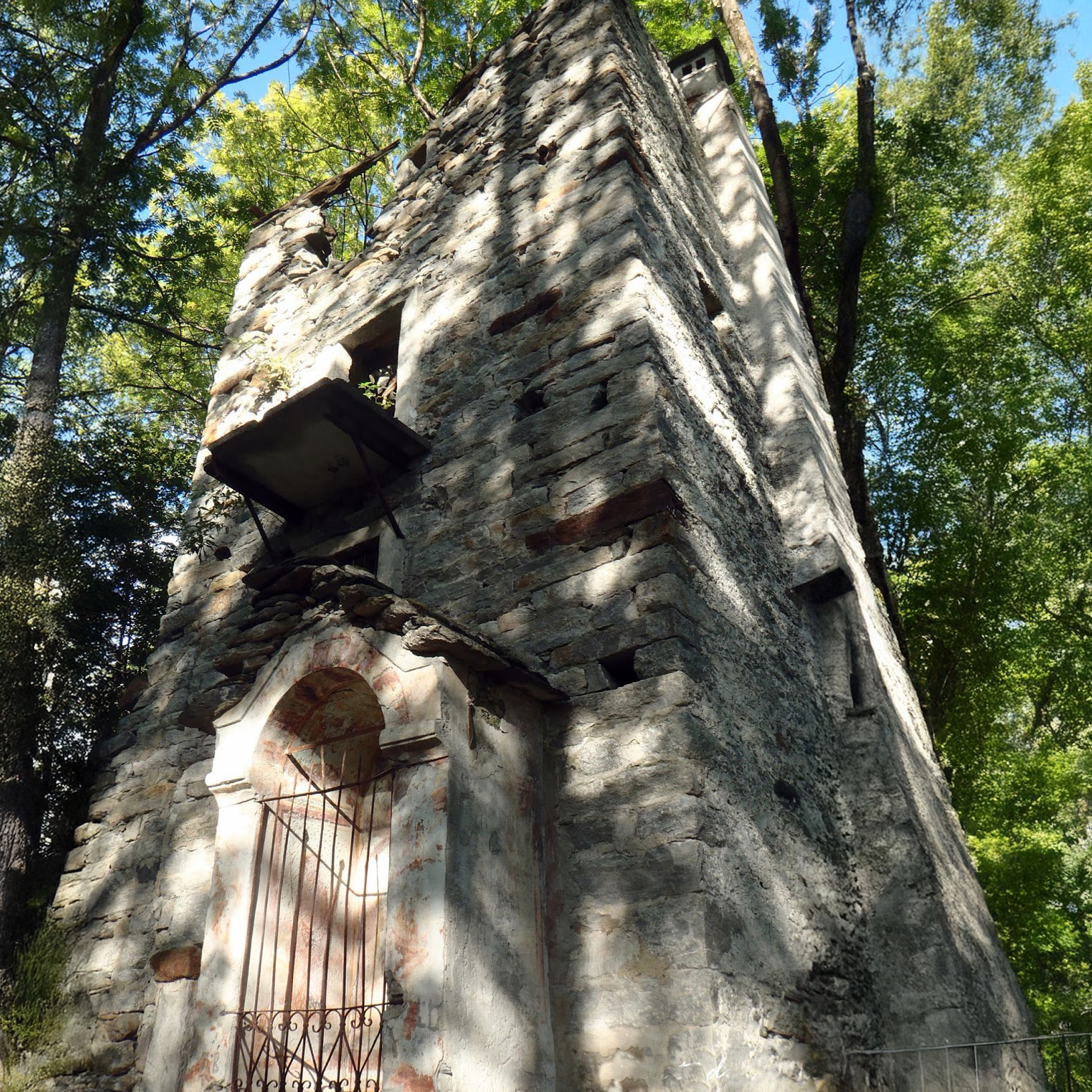
On the rise above the village at the entrance to the Vigezzo Valley, in the locality 'ai Castelli', there is a high tower with a podium-recinto, dating back to the 13th century. The abandoned but clearly visible structure can be reached by a hiking trail.Creggio Tower - Trontano
It is located in an isolated and dominant position. Built in the 12th century, it was rebuilt in the 15th century for defensive purposes against the frequent invasions of the Valais. A popular tradition reports that it was a refuge in the 13th century of the heretic Fra Dolcino. It is currently a private residence, visible from outside along the circular hiking trail between the hamlets of Trontano.Bell Tower - Trontano
A mighty tower dating back to the year 1000, as attested by an inscription on a stone in the masonry, stands on a hill not far from the Romanesque church of Santa Maria in Trontano. Due to its proximity to the sacred complex, when its defensive function ceased, it was used as a bell tower, a function it retains today. Visible from outside.Rambolone Tower - Bognanco
On a rocky spur along the mule track towards the hamlet of Pizzanco, the four-storey, 11-metre-high tower dominates the entire Bognanco Valley. The construction techniques in accurately squared stone blocks suggest a construction date in the 14th century.Casaforte di Veglio- Montecrestese
The Veglio fortifie house, also known as the Picchi Castle, was erected in the 15th century by the feudal lords De Rodis to control access to the Antigorio Valley. It survives as an imposing and impressive ruin that can be reached by hiking trail from Pontemaglio.Ardignaga Tower - Crevoladossola
This high tower (16 m), which originally had a raised door as its only entrance, is located in the small village of Ardignaga. Documented since the 13th century, it is well preserved, thanks to restoration work carried out by the Municipality of Crevoladossola. Visible from outside, it can be reached with a short walk.Casaforte di Rido - Crevoladossola
Situated in a dominant position, it was built by the powerful Della Silva family in the 15th century. The Rido fortified house is a complex fortified construction, which consists of a gate-tower, a central donjon and curtain walls. Visible from the outside, it is privately owned.Rondola Tower - Crodo
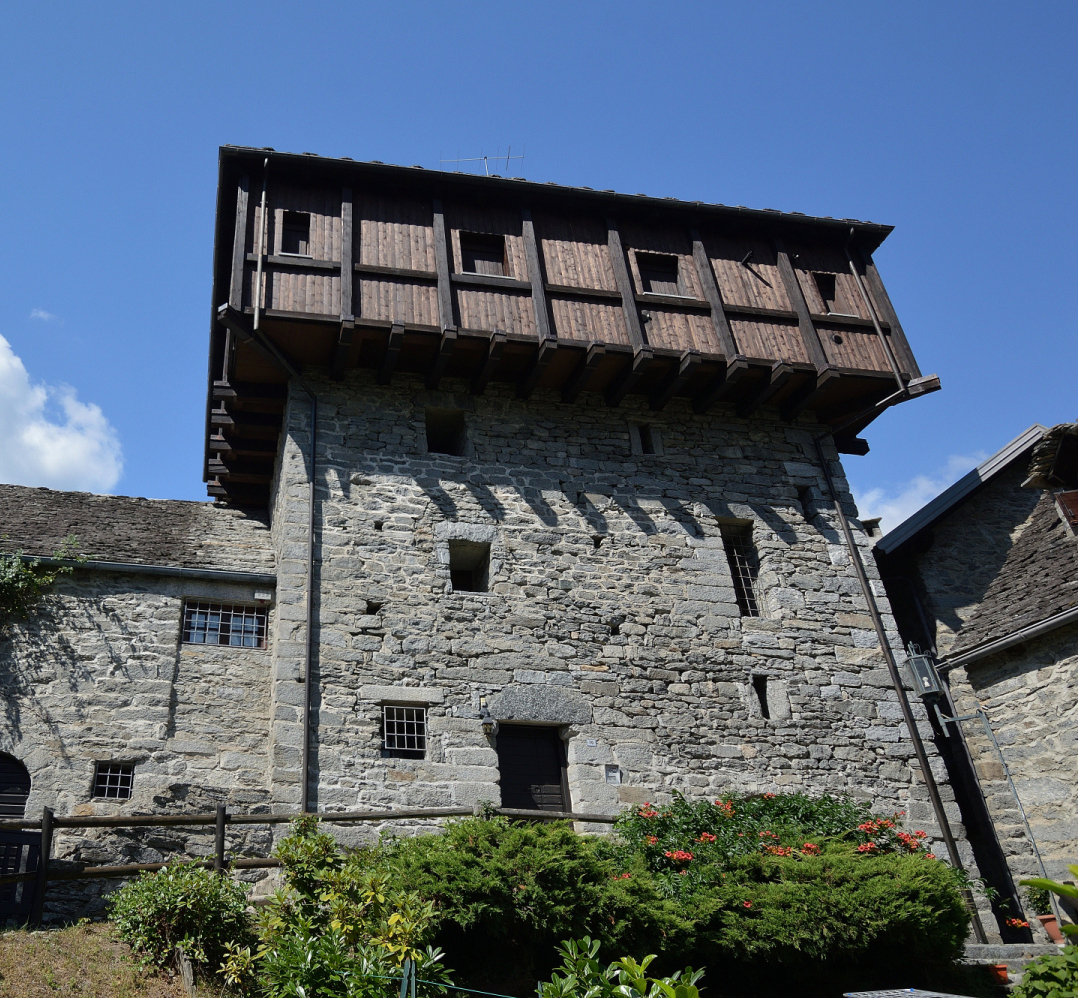
The tower in the hamlet of Rondola, typologically datable to the 15th century, stands tall and is crowned by a wooden patrol path. It is well preserved, thanks to recent restoration work. Currently used as a private home, it can be visited from the outside and can be reached by the Crodo-Mozzio hiking trail.Cristo Tower - Premia
Linked to the De Rodis feudal lords and dating back to the 15th century, it is a 13 m high structure made of serizzo blocks. Well preserved, it is privately owned and is not accessible inside. It is located in the hamlet of Cristo.Simonis Tower - Santa Maria Maggiore
The Simonis Tower, also known as Torre de Rubeis, after the name of the first family to own it, is a 14th century building located in the historical centre of Santa Maria Maggiore. Still used as a home by the Simonis family, it is perfectly maintained. The interior cannot be visited.Ancient Borromean Walls in Arona
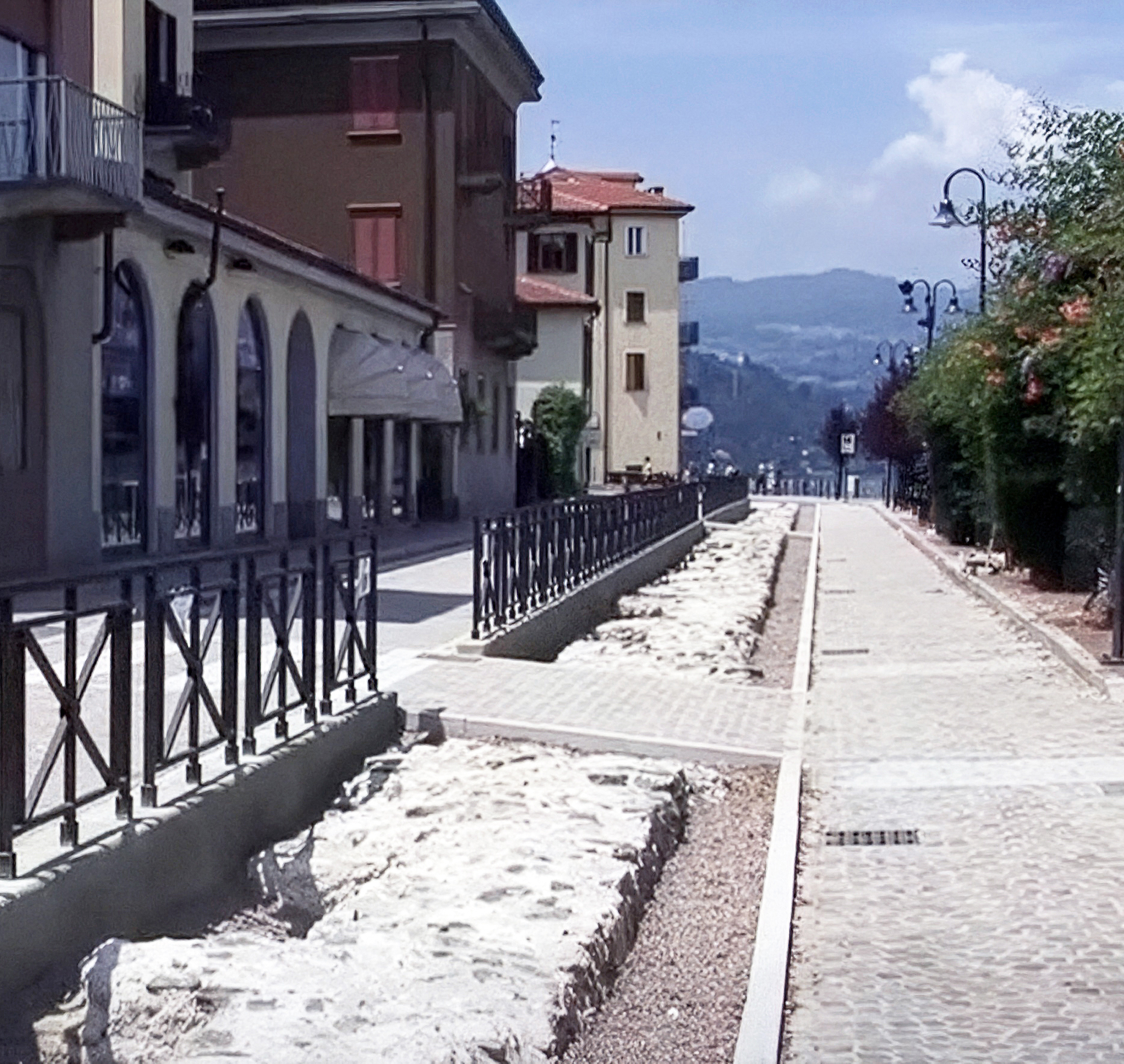
Restoration work carried out in 2017 brought to light a section of the walls that protected the village towards the lake. Built in the 15th century, they were dismantled in the Napoleonic era. The rediscovered section was left in view along the lakeside promenade.Gate and remains of the medieval walls of Omegna
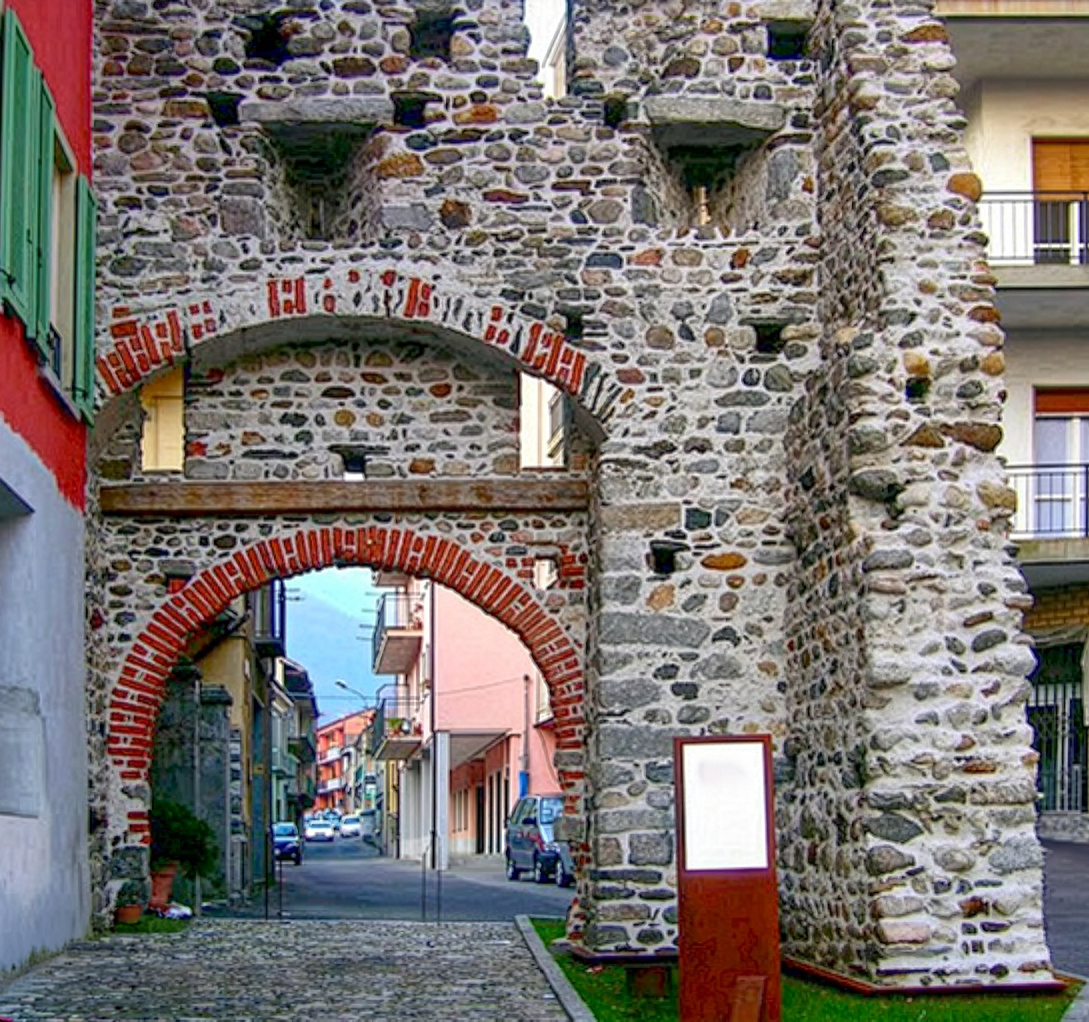
In the historic centre of Omegna, some remains of the city walls and a fortified gate dating back to the 12th century are preserved. The ruins underwent a conservative restoration by the Municipality of Omegna.Wall ruins in the locality of Borgaccio di Pieve Vergonte
A robust fortified wall, known as the 'Borgaccio wall', located in the Pieve Vergonte countryside, not far from the Toce, is said to represent the remains of an ancient settlement destroyed by flooding events. Recent archaeological investigations have also identified other buried remains and speculated that this was a former medieval shelter.